
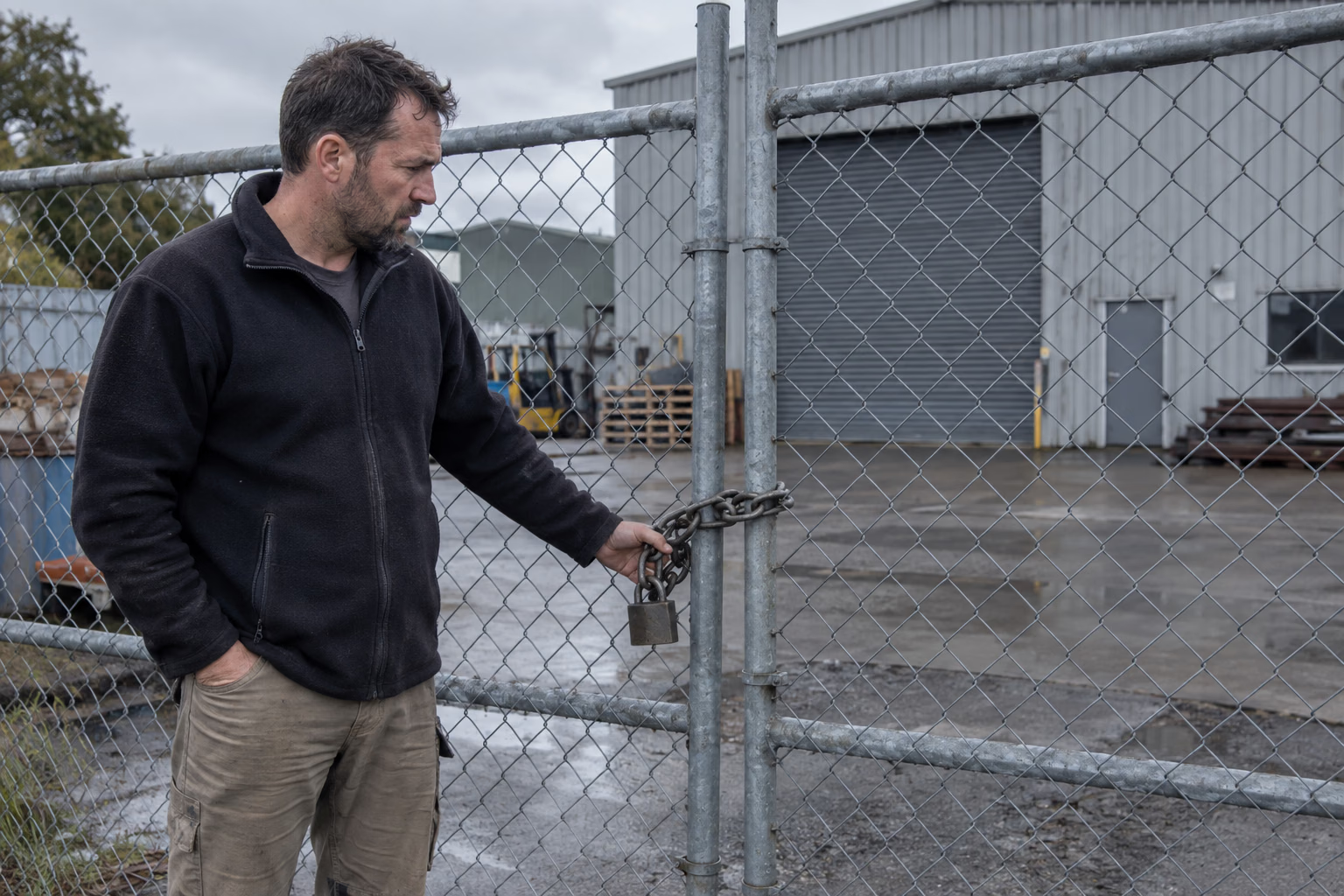
Finding the locks changed at a shop, office, café or warehouse is deeply unsettling. You may be worried about staff, stock, bookings and tomorrow’s trading. Focus first on safety, evidence and urgent professional advice. Whether a commercial landlord was entitled to take a particular step depends on the lease, notices, service, payments and facts. Do not assume a residential-tenancy rule applies to commercial premises.
What should I do immediately?
- Make people and goods safe. If there is an immediate safety risk, call the appropriate emergency service. Do not force entry or change locks yourself; that could make the position worse.
- Record what happened. Note the date and time, take photographs of the doors and any notice, save messages, and list people who saw what happened. Preserve your lease, rent ledger, bank transfers and earlier correspondence.
- Ask for the basis of the lockout in writing. Contact the landlord or property manager and request the notice relied on, the amount claimed, the date of service, and a practical way to collect urgent items or access records. Keep your message factual.
- Speak to a New Zealand commercial-property lawyer urgently. Ask them to review the lease and notice, whether cancellation or re-entry was effective, and what immediate relief or negotiation is available. Time can matter.
- Protect continuity. Let staff and affected customers know only what is necessary, consider temporary premises or remote operation, and document perishable stock or critical equipment you cannot reach.
If a rent arrears notice is involved, your lawyer can assess the Property Law Act 2007 lease-cancellation provisions, including the notice and relief rules. The correct response is fact-specific; this guide is not a legal opinion about the lockout.
What if rent arrears caused the dispute?
Ask for a reconciled statement rather than relying on a round number. Check base rent, operating expenses, GST, interest, credits and payments in transit. Have your accountant prepare a near-term cash plan. Your lawyer can discuss the appropriate route with the landlord, including a payment proposal, reinstatement terms, access to goods or an agreed exit. Get any agreement in writing before transferring money on an assumption that access will automatically resume.
Rent is only one part of the decision. Look at wages, suppliers, existing secured debt and the next tax payments too. If the underlying business cannot support those obligations, paying one arrears balance may not create a sustainable recovery. Business.govt.nz’s financial-trouble guidance encourages an early, complete view of debts and cash flow.
Can finance be part of the solution?
Sometimes, if suitable New Zealand real estate is available and the borrowing has a genuine business purpose. A business owner might need funds for an agreed arrears settlement, relocation, replacement stock or working capital after an interruption. Which purpose is appropriate depends on the legal position and a credible plan for trading again.
HomeSec can consider property-secured business finance from $20,000 to $1,000,000. We will listen to the circumstances without judging a difficult period as the whole story. Credit problems or missed rent need not stop an enquiry, but approval depends on the complete scenario, property security, legal position and repayment path. We cannot fix a lease dispute or guarantee that a landlord will restore access.
If approved, an open-term structure and up to six months with no scheduled payments may be available. Interest and fees may still accrue during that time. Funding in as little as 24 hours is possible only for some complete cases, subject to approval and settlement requirements. Compare the full cost and property risk with a landlord arrangement, owner funds, asset sale, relocation and professional restructuring advice.
Questions to put to your adviser and lender
- What exactly does the lease say about default, notice, re-entry, goods and relief?
- What is the verified amount required to resolve the immediate access issue?
- If access resumes, what does the next three to six months of trading look like?
- If access does not resume, what is the fallback location and cost?
- Which property could secure the proposed business loan, and what debt is already registered against it?
- How would the loan be repaid if sales recover more slowly than expected?
A steady next step
Get the legal position checked first. If finance could realistically help the business keep operating, tell us what happened, what it would cost to put it right and what property may be available. Let’s see if there is a funding path worth exploring.