Need finance to pay an overdue IRD tax debt? You've landed in the
right place.
Don't worry, we've got you. Tell us a little about your situation
and our team will get straight onto it. HomeSec is a direct lender
that helps New Zealand business owners clear tax debt and get back
to running the business.
Prefer to talk it through? Call 09 888 6550. No judgement, just a plan.
You are not alone
Tax debt happens to good businesses.
A slow-paying customer, a big provisional tax bill, a rough quarter or
a GST return that landed at the worst possible time. It happens far
more often than most owners realise. Inland Revenue reported that 556,000 customers had tax debt at 31 March 2026, and that GST and employer obligations such as PAYE make up 57% of
all overdue debt.
Owing IRD money does not make you a bad operator. What matters now is
acting early, while you still have choices.
Overdue GST
PAYE and employer deductions
Provisional tax
Terminal or income tax
IRD letters and final notices
A statutory demand
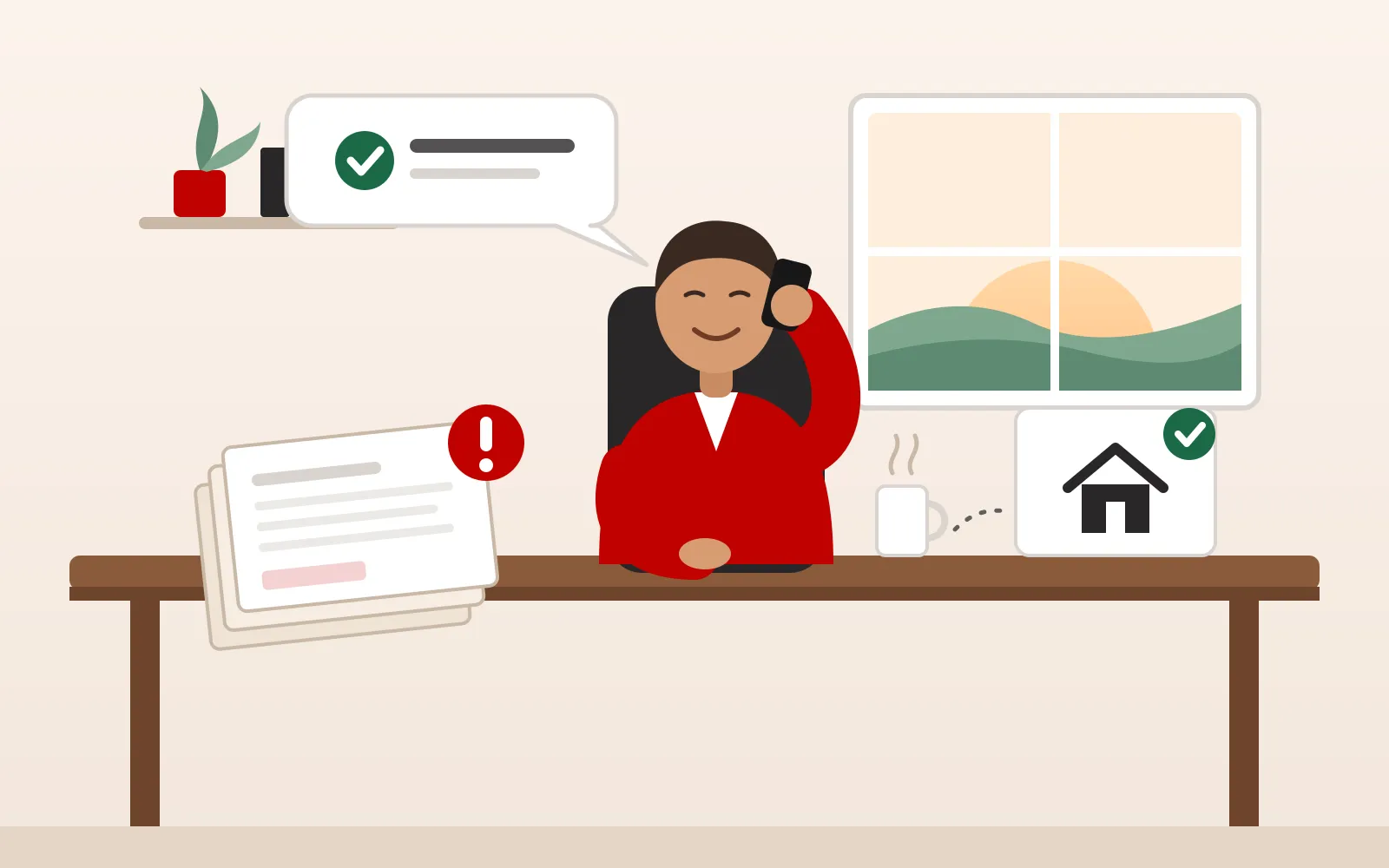
From a pile of overdue letters to a plan. Illustration.
Why acting now matters
IRD debt grows the longer it sits.
According to IRD's penalties and interest guide (IR240), a late payment penalty of 1% is charged the day after the due date,
and a further 4% seven days later. Interest is charged on top. Unpaid
PAYE attracts its own monthly penalty.
IRD is also collecting hard. In the nine months to 31 March 2026 it
issued 1,525 statutory demands and took 605 companies into
liquidation, according to its quarterly report on managing overdue tax debt.
Clearing the debt, or getting an agreed plan in place, stops the
snowball and takes the pressure off your bank account, your staff and
your sleep.
How HomeSec helps
Three simple steps to clear the tax bill.
1
Tell us a little about your situation
How much you owe IRD, which taxes, any deadlines, and the New
Zealand property you own. No formal valuation or cashflow records
are needed to start.
2
We get straight onto it
Our lending team reviews your scenario and comes back to you quickly
with what may be possible, and what we would need to see.
3
Funds to clear the debt
Once approved and the security and legal work are complete, funds
can be available in as little as 24 hours. There can be up to six
months with no scheduled payments while the business recovers.
You own New Zealand property, even with a bank mortgage on it
The business is viable and the tax debt is a hurdle, not the end
The bank has said no, or cannot move fast enough
Why owners choose us
Built for tight spots
Direct lender: you deal with the people who decide
Open-term finance with no fixed end date to race against
Tax debt and credit issues are assessed, not auto-declined
First and second mortgages almost anywhere in New Zealand
Be ready with
Helpful to have
Your latest IRD statement or letter
Property address and current mortgage balance
What caused the debt and what has changed
How you plan to repay or refinance the loan
Straight talk
Your other options with IRD.
We would rather you make the right call than the fastest one. IRD
offers instalment arrangements for debt you cannot pay in full. If you keep to the agreed payments,
IRD stops charging late payment penalties from the day the arrangement
is set up, although interest still applies. IRD can also consider financial relief in some hardship situations.
A loan can make sense when you want IRD paid in full and off your
back, when IRD will not agree to terms the business can meet, or when
clearing the debt is part of a wider plan to stabilise cash flow.
Borrowing is not the answer if the business keeps losing money and the
tax debt is a symptom of that. In that case, talk to your accountant
or a licensed insolvency practitioner first. Property offered as
security may be at risk if loan obligations are not met.
Can I get a loan to pay IRD tax debt in New Zealand?
Yes, it can be possible. HomeSec lends $20,000–$1,000,000 to New Zealand businesses for genuine business purposes, including clearing overdue GST, PAYE, provisional tax and income tax. The loan is secured by New Zealand real estate, and every application is assessed. Approval is never guaranteed.
Will owing IRD stop me getting a business loan?
Many banks treat IRD arrears as a red flag. HomeSec looks at the whole scenario instead: the amount owed, why it built up, the property offered as security and how the loan will be repaid or refinanced. Telling us about the tax debt upfront helps, not hinders.
Is a loan better than an IRD instalment arrangement?
Not always. An instalment arrangement can stop late payment penalties from the day it is set up, as long as you keep to it, although IRD still charges interest. A loan may suit when you want the debt cleared in one go, IRD will not agree to terms you can meet, or you need breathing room to keep trading. Your accountant can help you compare the two.
How fast can I get funds to pay IRD?
Funding may be possible in as little as 24 hours, subject to approval, documents, security, legal work and settlement requirements.
Can I use a second mortgage to pay IRD?
Yes. HomeSec can lend on a first or second mortgage over New Zealand property, so a home or investment property that already has a bank mortgage may still be used as security, subject to assessment.
IRD has sent a statutory demand. Is it too late?
Not necessarily, but deadlines are short and the consequences are serious. Get legal advice straight away, contact IRD, and tell us the deadline when you get in touch so we can tell you quickly whether we may be able to help.
Related pathways
Other ways HomeSec helps.
Information is general only and is not an offer or approval of finance. Lending is subject to assessment, acceptable property security, documentation, legal requirements and final approval. Independent legal, financial and tax advice may be appropriate for your circumstances. HomeSec is not affiliated with or endorsed by Inland
Revenue. This page is general information, not tax or legal advice.
Next step
Behind with IRD? Let's sort it together.
Tell us a little about your situation. It takes a couple of minutes, and our team will get straight onto it.